
Key Takeaways
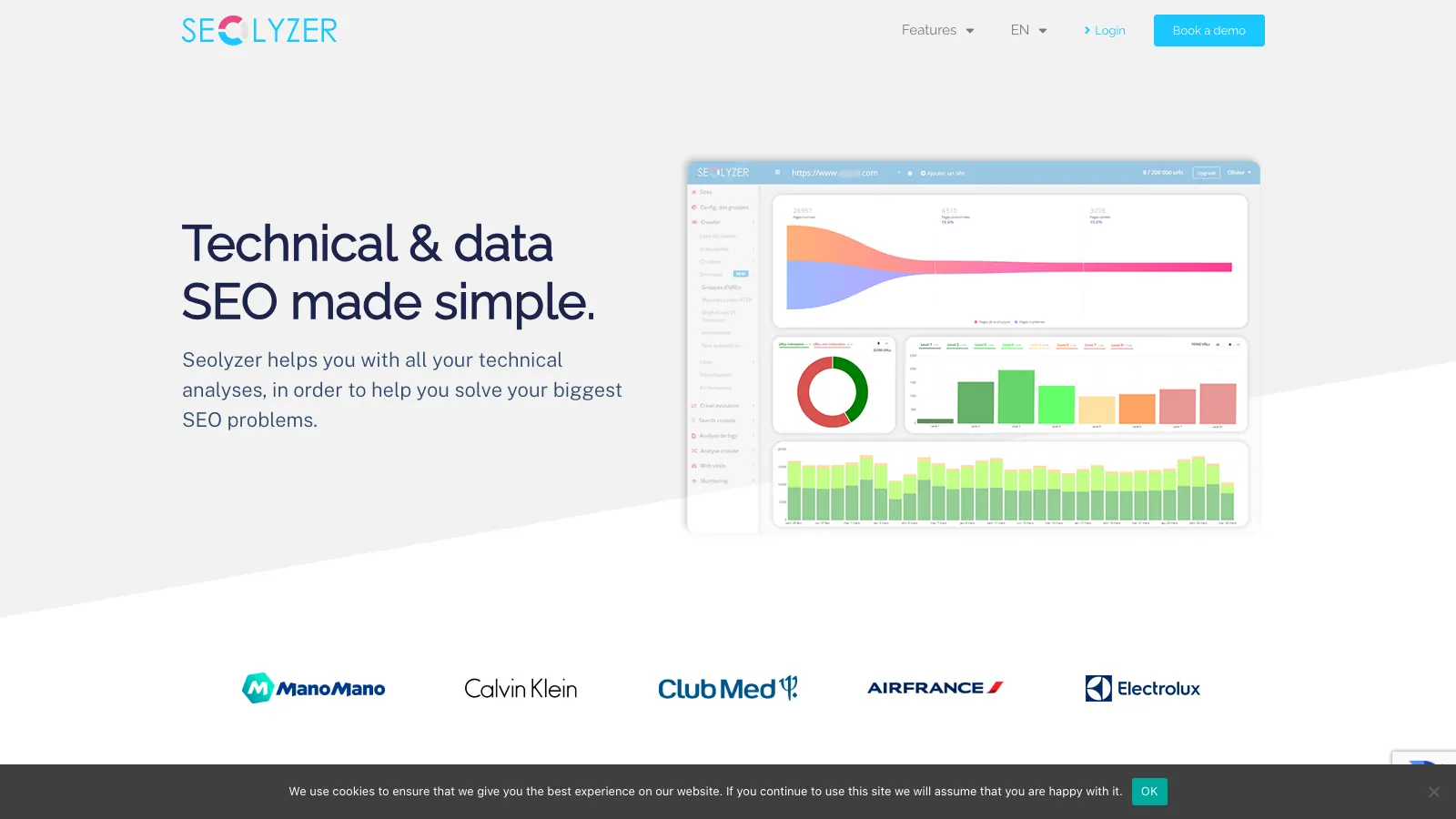
- Seolyzer analyzes server logs alongside Google Search Console metrics to reveal real-time Googlebot crawl patterns across large and enterprise web properties.
- Seolyzer operates on custom quotes requiring direct sales demos rather than publishing transparent self-serve subscription plans or automated signup tiers.
- Seolyzer supports programmatic data extraction through its official API but lacks native Model Context Protocol support for direct LLM agent workflows.
- Seolyzer is unnecessary for standard marketing websites lacking server log access or teams that merely require lightweight weekly site audit reports.
If a crawl cannot explain why Googlebot ignores important pages, Seolyzer brings server logs and Search Console into the diagnosis. It is a strong fit for technical SEO teams working on large or changing sites, while teams that need a published price or a simple audit tool should look elsewhere.
Agent access
- API
- Yes
- MCP server
- Not found on official pages
What are the main technical pros and cons of Seolyzer?
What works
- Combines crawls, server logs and Google Search Console data
- Streams Googlebot activity from connected logs in real time
- Exports data without limits and provides an API for internal tools
What to watch
- No public price, tier list or team bill to compare
- Useful diagnosis depends on having server logs to connect
- Seolyzer does not mention MCP, so agent workflows use the API
How does Seolyzer assist technical SEOs with log file analysis?
Seolyzer bridges the blind spot between finding on-page crawl issues and verifying whether Googlebot actually visited those specific URLs. Seolyzer brings site crawling, server-log analysis and Google Search Console data together, then lets you compare their signals for each URL or group of URLs. If your immediate question is how AI answers portray your brand instead, begin with the  AI Peekaboo review.
The practical advantage is a shorter path from a technical symptom to a decision. A crawl can show a page exists and Search Console can show search data, while the logs show the requests Googlebot made. Cross analysis puts those views together to surface orphan, ignored and inactive pages, redirects or errors that Googlebot did not follow, and unknown URLs not tracked by Googlebot.
I would not buy Seolyzer as a first technical SEO subscription. Its strength is evidence from your own server activity, not a friendlier version of a standard audit. If that activity matters to your work, though, the product has a clearer job than an all-purpose suite: show where Googlebot spends its time and where the site structure disagrees with it.
Which technical teams and enterprise sites need Seolyzer?
Crawl, logs and Search Console
Use the combined view to investigate large sites where bot behavior affects indexing decisions.
Crawl history
Compare crawls over time to find errors or regressions after a change.
Page categories
Group facets, pagination and other URL types, then see how Googlebot moves through that structure.
API access
Take crawl and log data into an internal dashboard or tool through the API instead of relying only on the interface.
Choose another tool if your team cannot connect logs or needs a quick, self-serve starting point. The useful question is not whether you want more crawl data. It is whether you need to reconcile that crawl data with Googlebot requests before you decide what to fix.
What log monitoring and crawling tools are offered by Seolyzer?
Real-time log analysis
Seolyzer collects events from your web server through a collector and reports Googlebot activity in real time. Its log views cover crawl volume, HTTP codes, desktop and mobile bots, pages Googlebot ignores, response time, most-crawled pages, orphan pages and cache rate. That makes it useful when waiting for a batch report would delay a migration or crawl-budget decision.
Crawling and crawl comparison
The crawler can run once or on a recurring basis. It reports indexability, HTTP codes, titles and metadata, depths, response time, orphan pages, sitemap URLs and internal PageRank, and can compare crawl history to find errors or regressions after a change. The vendor says a crawl can reach up to 50 million URLs at 1,000 URLs per second, which is relevant only if your estate is large enough to need that scale.
Cross analysis
Cross analysis is the reason to pick Seolyzer. It merges crawls, logs and Google Search Console data to identify inconsistencies, then shows categories such as pages Googlebot ignores, pages without SEO visits, redirects, errors and unknown URLs. You can also check crawl rate for sitemaps and inspect results by URL group instead of working one page at a time.
Page categorization and exports
Seolyzer categorizes pages in real time with hierarchical subcategories, so a team can inspect a section or URL type rather than a flat list of URLs. It also offers unlimited CSV and Excel exports. That combination is particularly helpful for a site with facets, pagination and templates whose technical risks differ by group.
API and access for collaborators
The API sends Seolyzer data to internal dashboards and tools, and the vendor says there is no limit on API calls or rows fetched. It also says collaborators and clients can be given administrator, contributor or reader access to analyses and data.
How does Seolyzer structure commercial pricing and demo access?
Facts checked 27 Nov 2026
Seolyzer has no public pricing page, published tiers or stated seat price. Its public call to action is a demo request, so there is no honest monthly plan, annual discount or three-person team bill to put in a comparison table.
| Buying detail | What Seolyzer publishes |
|---|---|
| Price | Contact for pricing |
| Plan names and allocations | Not published |
| Team access | Unlimited users and shares, with administrator, contributor and reader privileges |
| Published usage capabilities | Crawls up to 50 million URLs at 1,000 URLs per second; unlimited API calls and fetched rows |
| Free tier or self-serve trial | Not advertised |
| Demo | Book a demo |
Seolyzer buying details, 27 Nov 2026.Seolyzer website
That does not make Seolyzer expensive by itself, but it does shift the evaluation. Ask for the price, crawl capacity, log volume, API access and any implementation work in writing before you compare it with a self-serve crawler. Until those commercial terms are supplied, Seolyzer is best treated as a specialist option whose fit has to justify the sales conversation.
What are the major procurement drawbacks of Seolyzer?
Seolyzer complicates procurement primarily through its lack of publicly available plan pricing. You cannot build a real monthly bill without a quote. Seolyzer publishes unlimited users and shares, plus unlimited API calls and fetched rows, but you should confirm the crawl and log allocations in your proposed plan. The vendor also does not advertise a free tier or self-serve trial, which creates more work before a small team can decide whether its log-analysis need is genuine.
It also relies on access that not every SEO team has. Seolyzer supports connectors for PHP, Apache, Nginx and Varnish, plus sources including Cloudflare, Amazon S3, Akamai and OVH, or secure FTP. But without suitable logs, its best evidence, what Googlebot did on your own site, is unavailable.
Seolyzer lists a REST API but does not mention MCP, so ask before you build an agent workflow on it.
What alternative tools exist for teams considering Seolyzer?
For monitoring how AI answers portray your brand, start with AI Peekaboo review. AI Peekaboo plans start at $30 a month, checked 27 Nov 2026, and every paid plan includes MCP and REST API access.
For a visual technical crawler, the  Sitebulb review is the useful contrast. Its Lite tier costs $18 a month, checked 27 Nov 2026. The 300+ prioritized Hints and customizable PDF reports are Pro and Cloud features, while JavaScript rendering is available on every plan and MCP is available on all plans including the free trial.
For an online audit workflow, the  Sitechecker review covers a website crawler, rank tracker, monitoring and an AI Visibility Tracker in one subscription. It has a 14-day free trial with no credit card, and it offers a REST API, in beta, and MCP access on paid plans.
The deciding question is whether bot behavior is the evidence you are missing. If you cannot connect logs, or you are still deciding whether technical SEO deserves a specialist budget, start with a crawler review and return to Seolyzer when a crawl and Search Console no longer explain the problem.
What is the final technical assessment of Seolyzer?
Seolyzer delivers its highest value when technical SEOs must inspect live Googlebot server requests rather than rely on standard crawler reports. Its crawl, log and Search Console combination is made for teams with a serious crawl-budget, migration or indexation problem. Look elsewhere if transparent pricing, a lighter audit workflow or AI-answer monitoring is the immediate need.
Book a demo only after you can name the pages or URL groups whose Googlebot behavior you need to understand. Ask for a written price and the limits on users, crawls, logs and API access before treating it as your team's technical SEO platform.
How were technical specifications gathered for Seolyzer?
Seolyzer technical documentation, crawler features, log-analysis capabilities, and legal pages were verified on 27 Nov 2026. Pricing is not published, so no price or team bill appears here. The approach follows how we check figures.
- Seolyzer product and feature pages
- Seolyzer crawler, log-analysis and cross-analysis pages
- Seolyzer API and legal pages
What are frequent user questions regarding Seolyzer?
What makes Seolyzer different from a standard crawler?
Seolyzer combines a crawl with real-time server-log analysis and Google Search Console data. That means you can compare the site structure with the requests Googlebot actually made.
How much does Seolyzer cost?
Seolyzer does not publish prices, named plans or plan-specific commercial terms. It does publish unlimited users and shares, plus administrator, contributor and reader privileges. Its public route is a demo request, so ask for a written quote before budgeting.
Can Seolyzer crawl a large website?
Yes. Seolyzer says its crawler can process up to 50 million URLs at 1,000 URLs per second. Confirm the limits in your proposed plan before relying on that capacity.
Does Seolyzer have an API?
Yes. Its API can send Seolyzer data into internal dashboards and tools, and the vendor says API calls and fetched rows are unlimited.
Is Seolyzer GDPR compliant?
Yes. Seolyzer says it keeps data in France, anonymizes SEO visit data before storage and is GDPR compliant.
 Reviewed byDanny Kirk
Founder of ReddiReach.
 Checked byAndrés Felipe
Digital designer and marketer.
Every figure is checked against the vendor's own page. Read our editorial standards.